Your odds change as you do
These are our actual in vitro fertilization (IVF) results: fertilization and pregnancy rates, broken down by age and egg type, so you can decide with clear information instead of one generic number in a headline.

Pregnancy rates by age
Pregnancy rate per frozen embryo transfer (one frozen embryo transferred) at our clinics.
75%
With donor eggs
65%
With your own eggs, under 35
63%
With your own eggs, 35 to 39
35%
With your own eggs, 40 and over
Nuestras cifras, separadas por edad
An overall average can look great and still tell you nothing. The two things that affect your odds most are your age and whether you use your own eggs or donor eggs. So we show each group separately, and you can find the one closest to your situation.

Indicadores clave de nuestro laboratorio
Así se compara nuestro laboratorio con los estándares mínimos internacionales para laboratorios de FIV.
83%
Tasa de fecundación FIV (mínimo ≥ 60%)
91%
Tasa de fecundación ICSI (mínimo ≥ 60%)
59%
Tasa de blastulación (mínimo ≥ 40%)
65%
Tasa de embarazo por transferencia (mínimo ≥ 35%)



- Minimum standard: Represents the minimum values necessary to ensure an adequate level of performance.
(Vienna Consensus, 2024) - Benchmark: It represents the standards of excellence in high-performance clinics, an aspirational benchmark for offering the best quality. (Vienna Consensus, 2024)
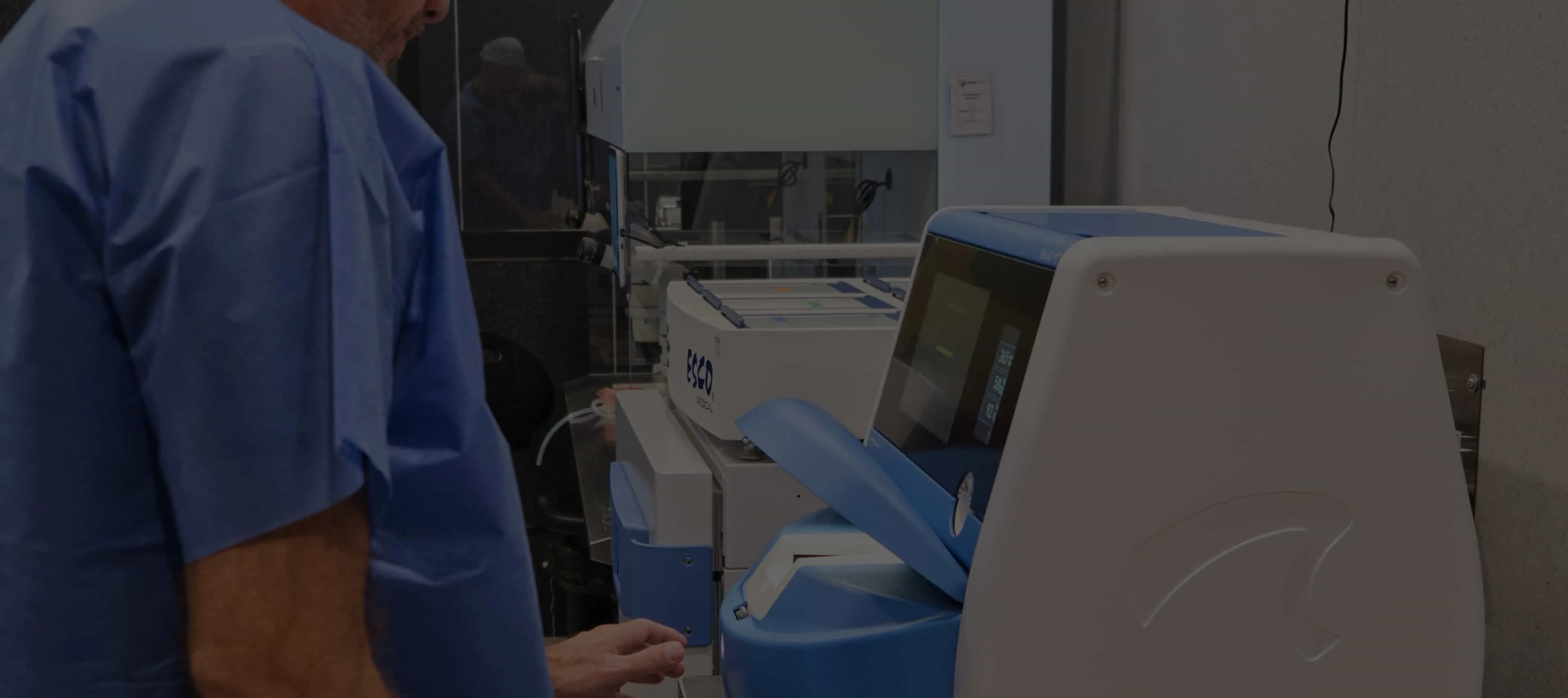
At FI, we monitor your embryos 24/7.
With EmbryoScope+, we follow each embryo's development without taking it out of its controlled environment, and every sample is fully traceable from start to finish. Technology improves your odds. Still, no reputable clinic can promise you a pregnancy, and we won't either.
Blog



Frequently asked questions
We answer the most common questions about IVF, timelines, and results, so you can make decisions with clear information.
Not every clinic calculates them the same way. Some report per cycle, others per patient and others per transfer. Before you compare, ask what they're measuring, what time period the data covers and whether it's broken down by age.
The number and quality of your eggs decline over the years. That's why, with your own eggs, the rate goes from 65% under 35 to 35% after 40.
The eggs come from young donors, so the age of the person receiving the embryo matters much less.
It means transferring a previously frozen embryo into the uterus. Our pregnancy rates by age are based on this type of transfer.
No. A good lab improves your odds, but no reputable clinic can guarantee a result. At your consultation, we'll give you a personal estimate using Alife Success Predictor™.
What do these numbers mean for you?
Book a free advisory call and we'll walk you through them using your own data.